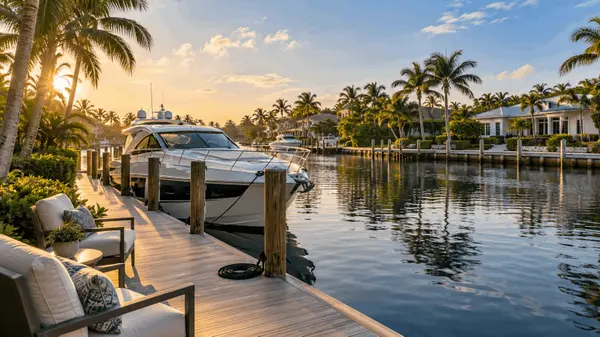
Boca Raton Waterfront Living: Picture the Whole Boating Day

A waterfront home is easy to imagine from the terrace. The more revealing exercise begins earlier: carrying supplies outside, getting everyone aboard, checking conditions, and deciding whether you have time for the trip you want. It ends later, after docking, putting equipment away, and preparing for the next outing. Those moments reveal whether the lifestyle actually fits.
If you are exploring waterfront living in Boca Raton, treat the property as both a home and a possible base for boating. The two uses overlap, but they are not interchangeable. A compelling view does not establish boating suitability, and an appealing dock does not tell you whether the house supports the way you want to live.
Write the boating brief before the property brief
Start with your vessel, or with a realistic description of the vessel you intend to acquire. Record its dimensions, draft, height, and service needs rather than relying on length alone. If your plans are still evolving, make that uncertainty explicit. Buying a property around an undefined future boat can leave important compatibility questions unanswered.
Then describe how you expect to use it. Frequent short outings create different priorities from occasional planned trips. Operating the boat yourself may involve a different household routine than working with professional support. Guests, equipment, preparation time, and your willingness to coordinate maintenance all belong in the brief. The best setup is the one that suits your actual habits.
Access is a route, not a listing phrase
Ask for a qualified review of the route between a property and the waters you intend to use. Relevant questions may involve bridge clearances, depth, tidal conditions, maneuvering room, and applicable restrictions. Verify what matters for your particular vessel. A broad marketing description should never stand in for a route assessment or a professional judgment about safe operation.
Walk through an ordinary departure and return
At a showing, begin where your boating day would begin. Follow the path from parking or storage to the boarding area. Consider bags, provisions, equipment, and the needs of the people who would accompany you. Look carefully at changes in level, walking surfaces, and the boarding arrangement. Convenience is a sequence of small details, not simply proximity to the water.
Next, walk through the return. Where would equipment go? How would routine cleanup and vessel care be handled? Which tasks would you perform, and which would require outside help? Do not assume a service connection, storage area, or support arrangement exists because it would make sense there. Confirm each element that your intended routine depends on.
Now remove boating from the picture. Spend time inside the home and consider privacy, daylight, glare, outdoor exposure, and the connection between living spaces and the waterfront. Visit at different times when practical. You should want to live in the property on the days you do not leave the dock, not only on the days when the boating plan works perfectly.
Distinguish the waterfront from the rights that come with it
Water frontage alone does not establish ownership of a structure, exclusive use, permission to alter it, or suitability for your vessel. Request the relevant title, survey, permit, and use documentation. Where an association or another authority has a role, identify the applicable restrictions. Have appropriate professionals explain material issues rather than filling gaps with assumptions.
Match inspections to the assets being evaluated
Ask whether marine-related structures and systems need specialists beyond the general home inspection. A dock, seawall, lift if present, and related installations can raise different questions about condition, capacity, maintenance, and repair. Establish what each inspection covers and what it does not. Appearance alone cannot demonstrate structural condition or compatibility with the loads and uses you have in mind.
If your plan depends on changing a dock or adding equipment, investigate feasibility before treating the improvement as part of the property you are buying. A proposed alteration may involve technical review, permissions, or other limitations. Separate an initial idea from a documented approval. That distinction helps prevent an attractive concept from becoming an unsupported purchase assumption.
Budget for ownership and for operating the lifestyle
Create separate categories for the residence and the boating setup. Obtain property-specific information for insurance, maintenance, association obligations if applicable, and any work identified during inspections. Add the services your boating routine would actually require. A useful budget identifies its sources and uncertainties; it does not hide unknown items inside a single reassuring estimate.
Your time is part of the operating plan
Decide who would coordinate maintenance, monitor the property during absences, and respond when conditions require attention. Discuss applicable weather procedures with qualified providers and review relevant insurance requirements. Avoid assuming that an association, contractor, or policy automatically takes responsibility for a task. Clear assignments matter, particularly if you expect to use the home intermittently.
It is also worth comparing waterfront ownership with keeping a boat separately from the residence. This is not a claim that one arrangement costs less or works better. It is a way to test what you value: immediate proximity, a particular home layout, flexibility, or a different division of responsibilities. Evaluate actual available options and their terms before choosing.
Use the view as an invitation, not the conclusion
For each finalist, summarize vessel compatibility, route questions, documented rights, inspection findings, expected responsibilities, and unresolved items. Mark what has been confirmed and what still needs evidence. This creates a more meaningful comparison than ranking photographs. It also gives your advisory team a clear picture of which questions could materially change your decision.
The right waterfront property should make sense after the first impression has faded. You should understand how you would use it, what it asks of you, and which compromises you accept. To explore Boca Raton waterfront living through that lens, speak with Enrique Urdaneta. Start with the boating day you want to repeat, then identify the home that can support it.
Recent Posts